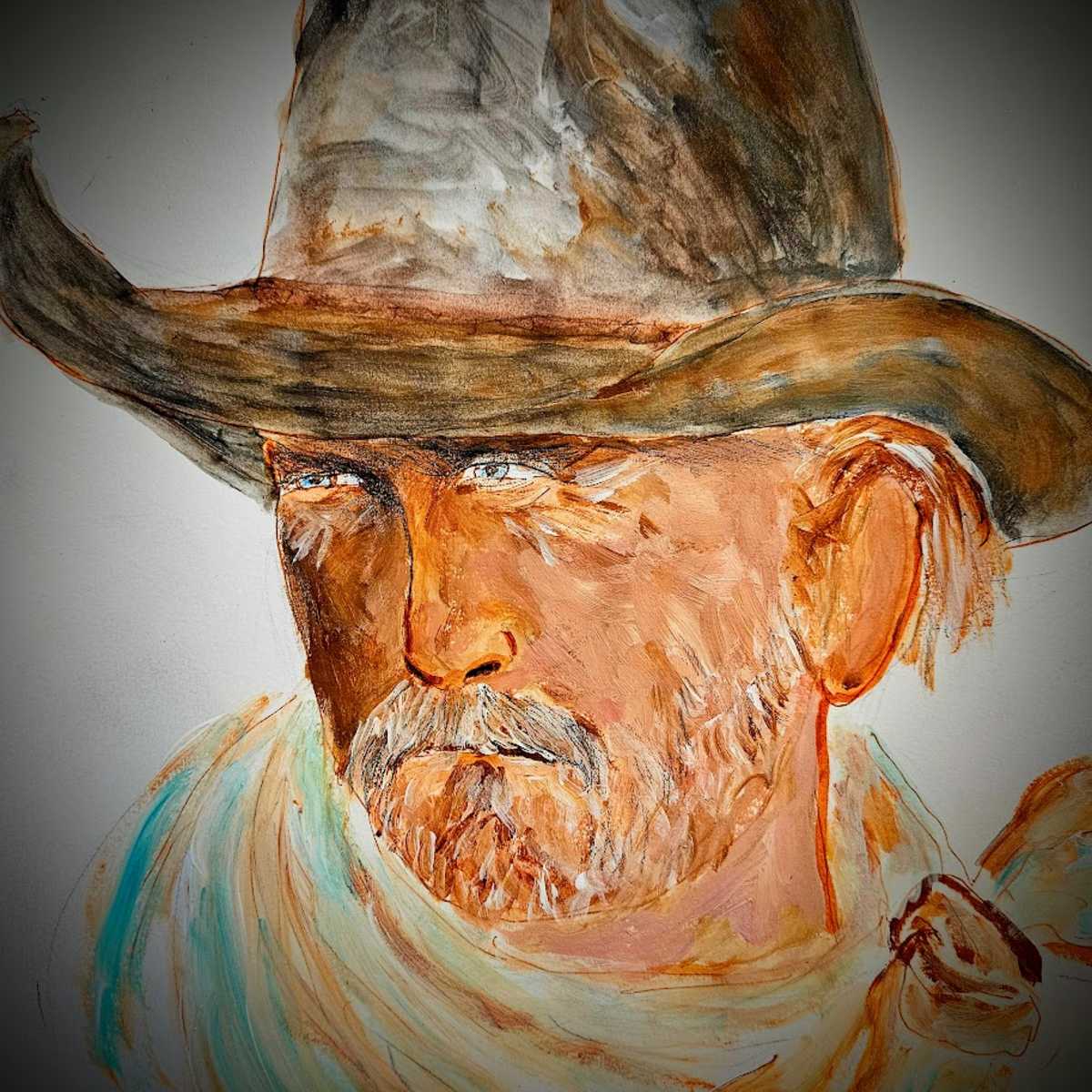
Until I looked up one of the pieces I did on Robert Duvall back in the 1980s, I had forgotten about his supporting role in the Canadian production of The Terry Fox Story. Duvall had not even heard of Fox, and when we spoke on the terrace of the Majestic Hotel at the Cannes Film Festival, he admitted the reason he accepted the part: “I needed the work. That’s basically what it was. I mean it was a nice project, a very lovely project, but I hadn’t done a feature in a year and a half…I had to work.”
At the time, it seemed hard to imagine that Duvall, who had become regarded as one of the finest and most respected American actors, could be out of work. But it was a reminder that more than anything else, Robert Duvall throughout his career, despite all the accolades, was always a working actor. He was never the romantic lead, he almost never got the girl, but he always managed to stand out memorably no matter how short a time he was onscreen.
He only appeared for a couple of minutes as the reclusive Boo Radley at the end of To Kill A Mockingbird, his first film in 1962, but all these years later his performance remains the one that is most remembered. In True Grit playing the outlaw Ned Pepper he could project the menace required to go up against John Wayne. The movie also opened the way for him, particularly as he got older, to become one of the screen’s most convincing cowboy actors.
Part of a now legendary acting ensemble in two Godfather movies (he didn’t do the third because—you guessed it—they wouldn’t pay him enough), Duvall’s quiet authority dominated every scene he was in as Tom Hagan, the soft spoken consigliore to Marlon Brando’s Don Corleone.
Does anyone remember any other sequence in Apocalypse Now other than the one in which Duvall appeared as Colonel Kilgore, uttering one of the most memorable and endlessly repeated lines in movies: “I love the smell of napalm in the morning. It smells like victory.”
The Robert Duvall I met on a lovely sundrenched morning in Cannes, was handsomer than expected, a bit shy and nervous about doing interviews, sitting close to his wife Gail Youngs, whom he had married the year before and would divorce a couple of years later. He explained that his father, a rear admiral in the U.S Navy, wanted Bobby, as everyone called him, to follow in his footsteps. His father, he went on, was unhappy to hear that his son had decided upon a much different career path. “I just wanted to be an actor,” he told me.
Even then, money drove him. He loved the New York stage, but “I would be in an off-Broadway play, you’d get thirty-seven bucks a week. For television, you’d get like one thousand, two thousand dollars a week. So eventually you see that you’d rather not do TV, you’d rather do features because there’s a better quality. Oh, yeah, to make a living, travel, meet people.”
At the end of our conversation, I jokingly asked him if he’d like to play something romantic where Robert Duvall gets the girl. The question produced an unexpected glint in stony eyes that looked at you with disconcerting directness. “Yeah,” he said enthusiastically. “I used to do Naked City episodes on TV, and I was always the guy who walked away at the end with nobody.”
The working actor, who died Monday at the age of 95, had to settle for greatness.